


Some links on this page may be an affiliate link, if you make a purchase through the link, we may earn a commission at no additional cost to you.
See Shooting Stars from Halley’s Comet: Your Viewing Guide to the Eta Aquariids Meteor Shower
Did you catch any shooting stars during the recent Lyrid meteor shower? If you did, fantastic! If not, or if you’re simply eager for more celestial wonders, you’re in luck. The next significant meteor shower gracing our skies is the Eta Aquariids, and while it favors the Southern Hemisphere, stargazers in the USA can still witness its ethereal display.
This shower, born from the dusty remnants of the famous Halley’s Comet, offers a chance to see up to a few dozen meteors per hour under dark skies in early May. So, dust off your blankets, find a dark spot, and get ready to witness some cosmic fireworks!
When to Watch
The Eta Aquariid meteor shower is active from around April 19th to May 28th, but it will reach its peak around May 5th and 6th, 2025.
For viewers in the USA, the best time to try and spot these meteors will be in the pre-dawn hours on these peak nights. This is when the radiant point in the constellation Aquarius will be highest in the eastern sky before the sun begins to rise.
Tips for Prime Viewing in the USA
While the Eta Aquariids put on a grander show in the Southern Hemisphere, here’s how you can maximize your chances of seeing them from the USA:
- Find a Dark Location: Escape the light pollution of cities and towns. The darker your surroundings, the more meteors you’ll be able to see, especially the fainter ones.
- Look East Before Dawn: The radiant point of the shower, Aquarius, will be in the eastern part of the sky before sunrise. Focus your gaze in that general direction.
- Be Patient: Meteor showers are a waiting game. Allow at least 20-30 minutes for your eyes to fully adapt to the darkness. Avoid looking at your phone or other bright lights during this time.
- Lie Back and Relax: Bring a comfortable blanket or reclining chair so you can comfortably scan the sky without straining your neck.
- Check the Moon Phase: Unfortunately, the moon will be in a waxing gibbous phase around the peak of the Eta Aquariids in early May 2025. This means it will be quite bright in the sky for a significant portion of the night and may make it harder to see fainter meteors. The darkest viewing window will still be in the pre-dawn hours before the moon rises too high in the east.
- No Special Equipment Needed: You don’t need binoculars or a telescope to see meteors. They are best viewed with the naked eye, allowing you to take in a wider expanse of the sky.

A Comet’s Legacy
What makes the Eta Aquariids particularly interesting is their connection to one of the most famous comets of all time: Halley’s Comet.
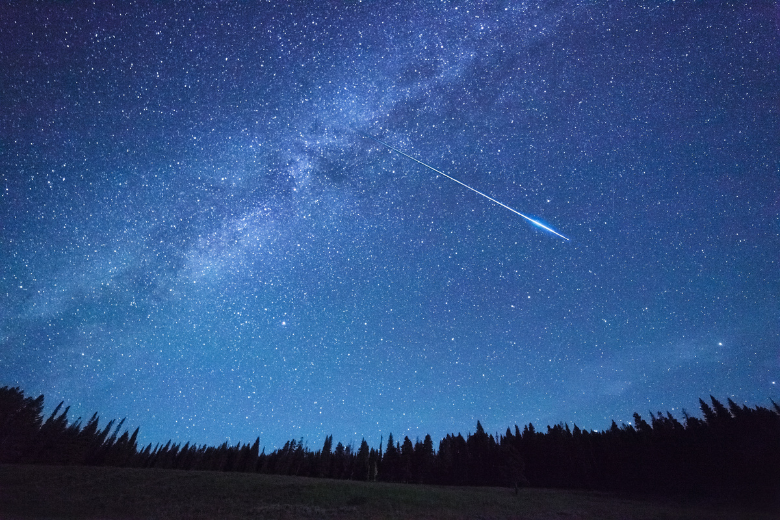
This periodic comet leaves behind a trail of dust and debris as it orbits the Sun. When Earth passes through these streams of particles, they burn up in our atmosphere, creating the streaks of light we see as meteors.
The Eta Aquariids are one of two meteor showers linked to Halley’s Comet; the other is the Orionids in October.
Wrap Up
While the Eta Aquariids might not be as prolific in the Northern Hemisphere as some other meteor showers, they still offer a wonderful opportunity to witness a celestial event and connect with the legacy of Halley’s Comet.
So, set your alarms for the early mornings of May 5th and 6th, find a dark sky, and keep your eyes peeled for these fleeting streaks of cosmic light. Be mindful that the waxing gibbous moon may present some challenges for viewing.
If you happen to miss the Eta Aquariids or are eager for more shooting stars, mark your calendars for the next major meteor shower visible from the USA: the Perseids, which typically peak in mid-August and are known for their impressive display under often favorable summer night skies.
Happy stargazing!